Starving seabirds line San Diego’s coast. Rising ocean temperatures are to blame
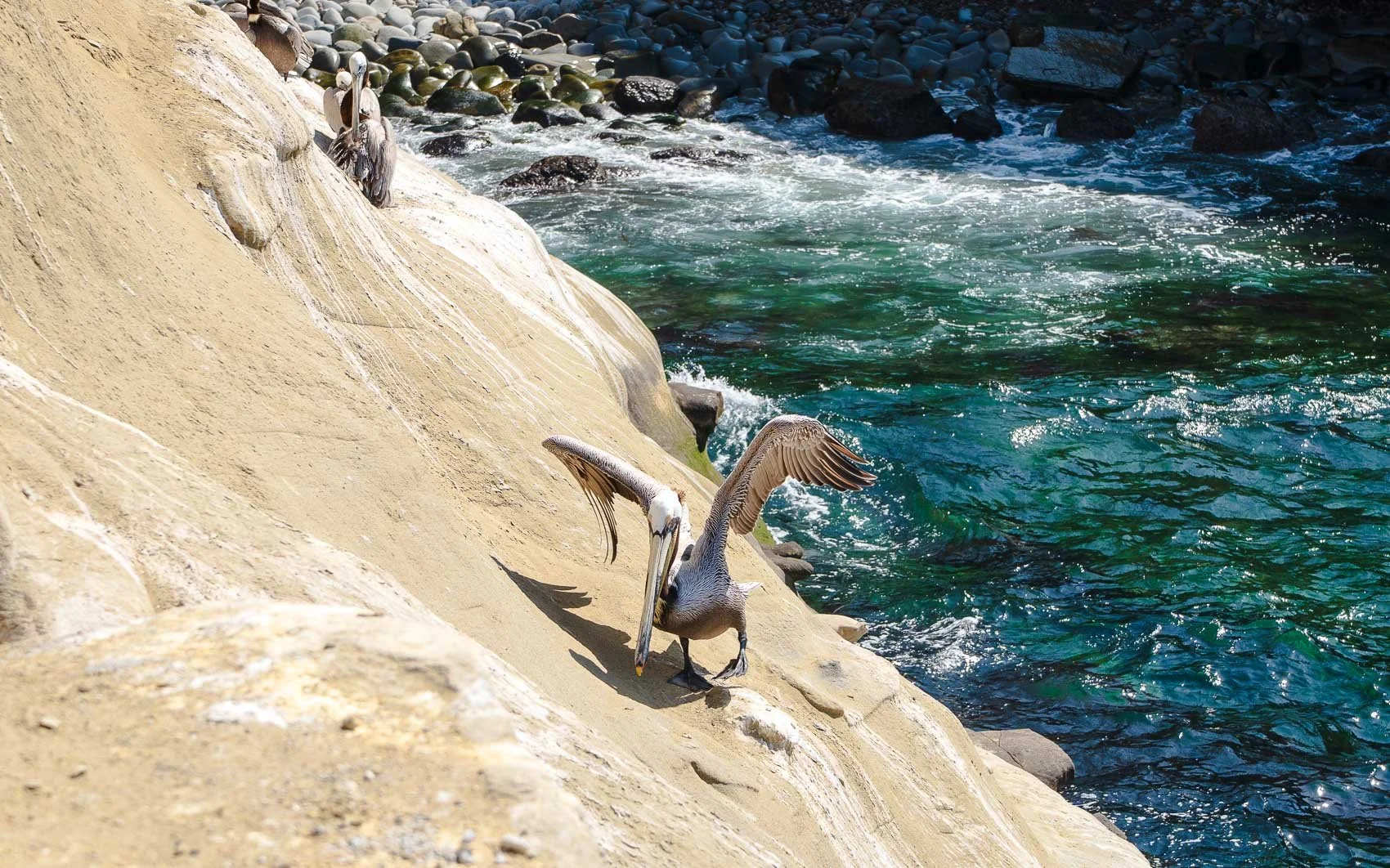
Brown pelicans are a common sight along San Diego’s coast, ranging from Imperial Beach to Oceanside. This particular bird was photographed on the cliffs of La Jolla. (Photo by Thomas Murphy/Times of San Diego)
From Mission Beach to La Jolla, emaciated and starving birds are dying along Southern California’s coast due to a lack of food.
Rising ocean temperatures have pushed fish into cooler, deeper waters further offshore, out of reach for seabirds.
“The amount is a lot more than we’ve seen in the past. The animals that we are rescuing are coming in extremely emaciated, lethargic, dehydrated,” said Jeni Smith, rescue supervisor at SeaWorld.
As a result, the carcasses of brown pelicans, cormorants, common murres and seagulls have decayed on San Diego beaches for months. Many of these birds do not have feet designed to live on land, Smith said, so seeing them stranded on beaches is ‘very bizarre.’ These native species rely on fish populations that live close to shore, meaning they are at particular risk.
Researchers say it will last as long as the water remains unseasonably warm, driving fish further out to sea.
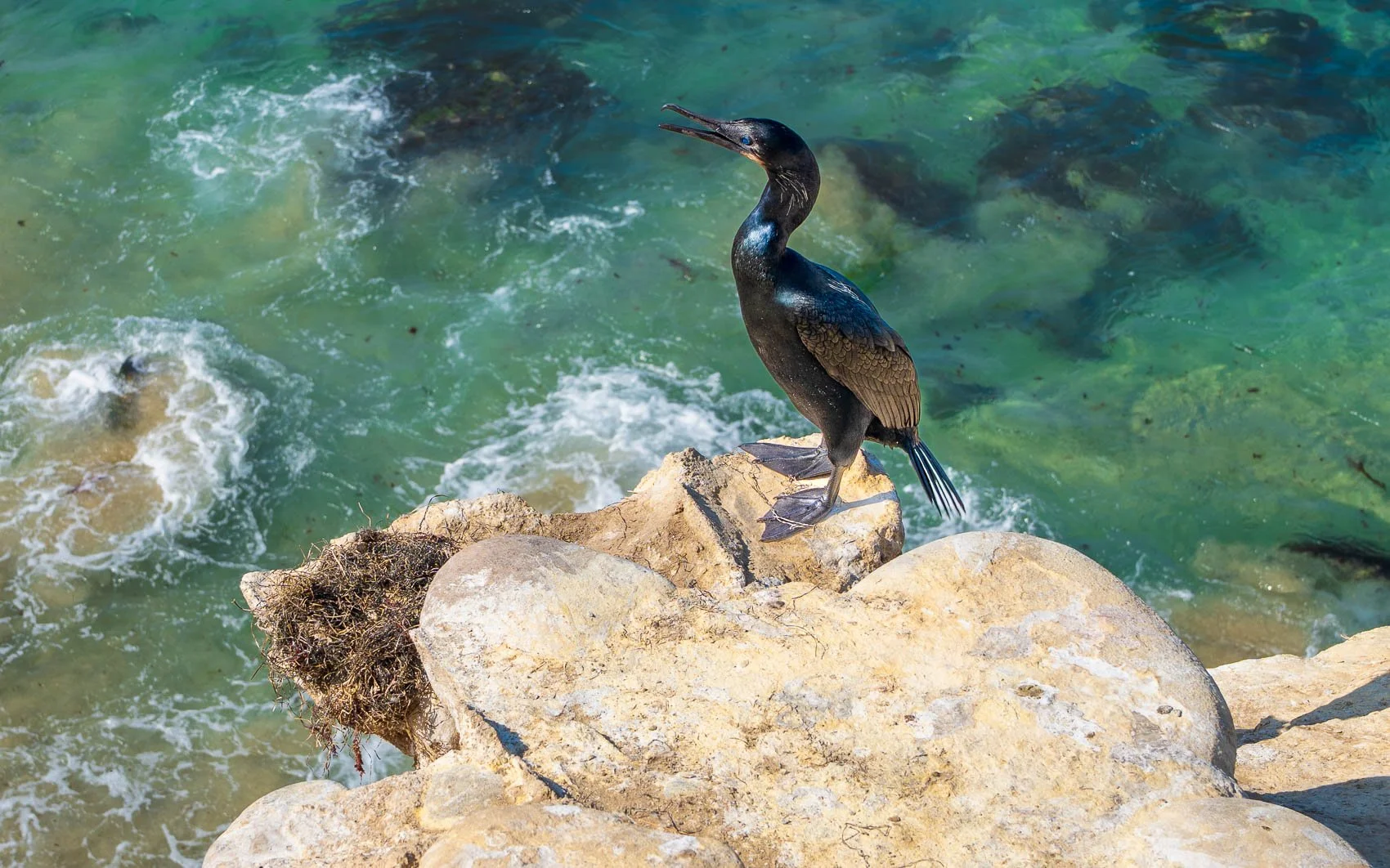
Brandt's cormorants have sharp, hooked beaks. Jeni Smith, a SeaWorld rescue supervisor, says they normally never approach people and recommends keeping distance. (Photo by Thomas Murphy/Times of San Diego)
“The unusually warm water for this time of the year has driven the fish to go deeper, and once the fish go deeper, then the birds can’t reach them,” said Philip Unitt, chair of ornithology at the San Diego Natural History Museum.
The National Oceanic and Atmospheric Administration (NOAA) has tracked the enveloping marine heatwave since last summer. The agency has documented higher-than-average surface water temperatures, part of a growing pattern of marine heatwaves in the eastern Pacific.
Sea surface temperature anomalies (SSTa) in the California Current ecosystem. (Image courtesy of NOAA)
El Niño and La Niña – opposing warm and cool phases of a climate pattern – can also influence marine ecosystems along the California coast.
During El Niño events, warmer surface waters and shifting wind patterns typically weaken coastal upwelling, reducing the rise of cold, nutrient-rich water that supports plankton and fish populations near the surface.
An El Niño is expected in the coming months, reflected in rising sea surface temperatures across the eastern Pacific.
However, according to NOAA, these natural climate cycles are now occurring on top of an ocean that is already warmer than average, which can amplify their ecological effects.
Scientists at Scripps Institution of Oceanography have monitored this warming trend along California’s entire coast. Their La Jolla station has been in operation for over a century, and has measured record high water temperatures since the year began.
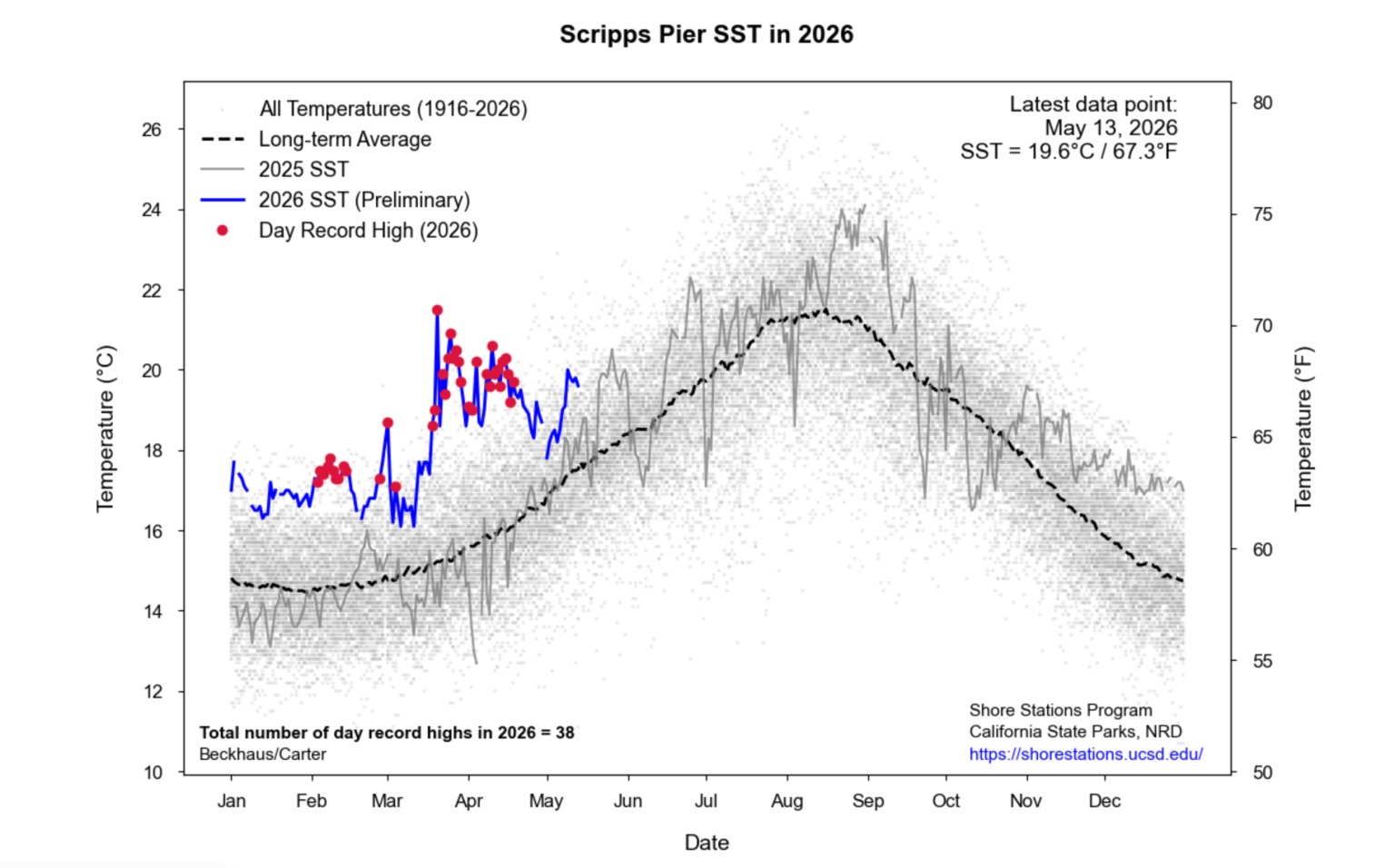
There have been a total of 38 record high days – well above the long-term average – in La Jolla since the start of the year. (Image courtesy of the Scripps Institution of Oceanography)
Warmer surface waters change how the ocean’s layers mix. Normally, winds push surface water offshore and allow cold, nutrient-rich water to rise from the deep ocean in a process called upwelling. The cold water fuels plankton blooms, which feed small schooling fish near the surface.
During marine heatwaves, this system weakens.
Warmer water sits on top, like a lid, preventing that nutrient-rich water from rising to the surface. With fewer nutrients, plankton numbers decline, and fish either move deeper or migrate farther offshore in search of food – affecting the seabirds that rely on them.
“We have been seeing an increase in the number of seabirds coming into rehabilitation facilities and washing up dead on the beaches across southern and central California for a few months now,” said Tammy Russell, a seabird expert at Scripps. “Most of the birds are emaciated and have tested negative for HPAI (avian flu); therefore, we have concluded that the primary cause of this mortality event is due to starvation.”
Brown pelicans face growing challenges, according to International Bird Rescue. Since March, the group has taken in over 185 birds in Southern California – nearly half are pelicans.
These results already match levels from last year’s Brown Pelican Crisis, when nearly 180 brown pelicans were rescued after algal blooms introduced a neurotoxin called domoic acid into their food supply – causing tremors, seizures and death.
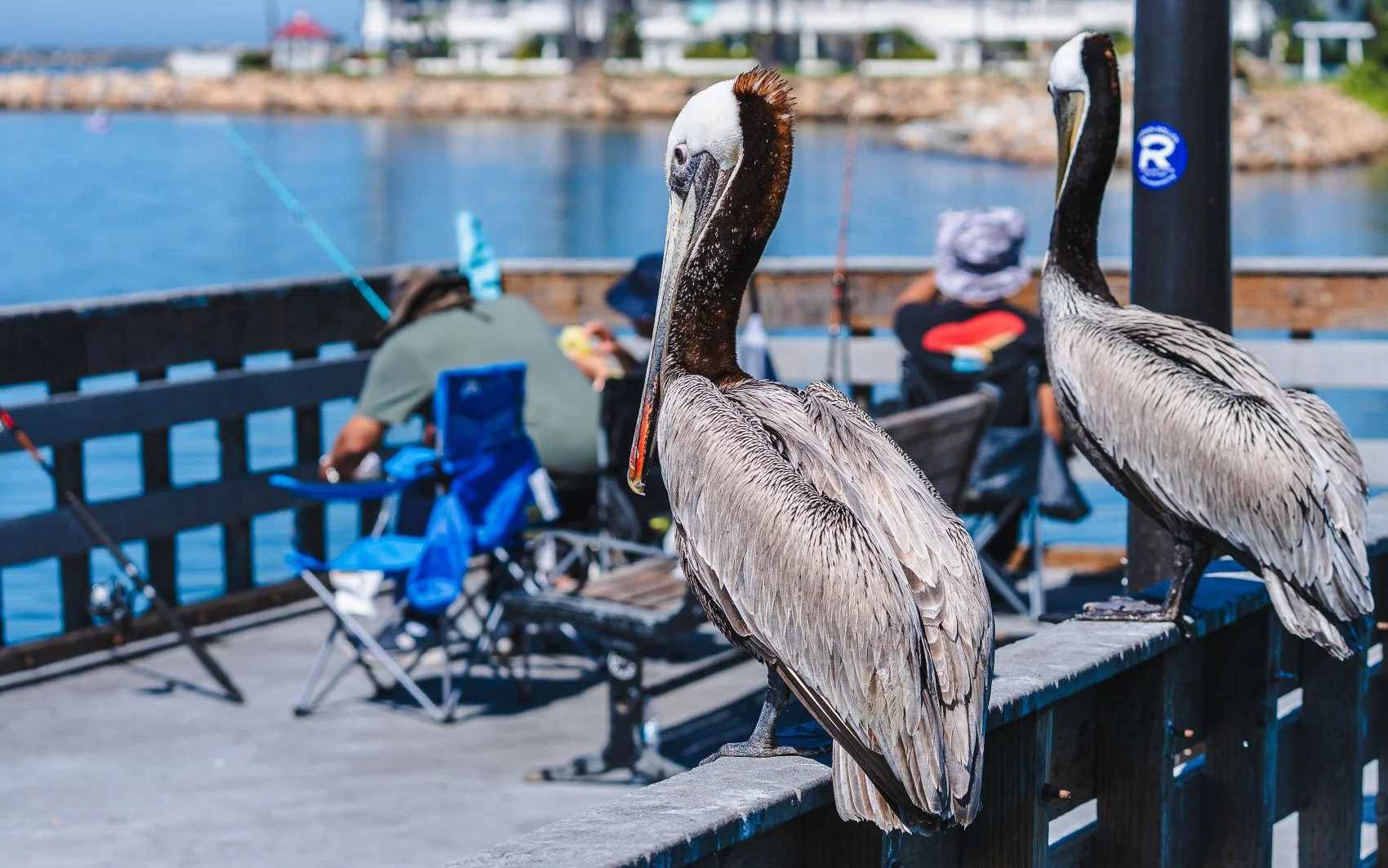
Brown pelicans observing fishermen in Oceanside — hoping for an easy meal. (Photo by Thomas Murphy/Times of San Diego)
The 2025 algae blooms were associated with nutrient-rich waters brought to the surface by upwelling that, combined with rising ocean temperatures, fueled the growth of toxin-producing algae.
Together, these events point to a coastal ecosystem under increasing stress.
While seabird deaths can be caused by different mechanisms – food shortages during marine heatwaves or toxic algal blooms – both are linked to broader changes in ocean conditions driven by warming waters off the Southern California coast.
“Currently, seabird researchers across California are working together, sharing data, and in regular communication to monitor this event,” Russell said.
Experts will continue conducting monthly beach surveys for dead seabirds. Russell encourages beachgoers who see struggling seabirds to contact SeaWorld Rescue to report the location.
“When we started getting four or five a day, it really increased our workload tremendously. So it was like all hands on deck,” said Smith, referring to SeaWorld’s stranded animal rescue operations.
SeaWorld’s rescue supervisor, Smith, warns beachwalkers not to handle the birds to avoid additional trauma. The best thing to do is report the animal in distress, telling rescuers whether or not it can still fly, and then make videos documenting any unusual behaviors, which can help diagnose the problem.
If a rescue occurs, the road to recovery is slow, protecting birds who haven’t eaten for weeks.
“It could really shock their system. It’s called refeeding syndrome – their body can’t take it, so they could regurgitate, and then they’re not getting any calories,” Smith said. “I’m trying to think positive, but also prepare.”
As ocean temperatures continue to rise, scientists and rescuers say these strandings may become an increasingly common sight along the Southern California coast.
» Originally published by Times of San Diego on May 13, 2026.