Holocaust exhibit enters last week at Grossmont College in only California stop on national tour
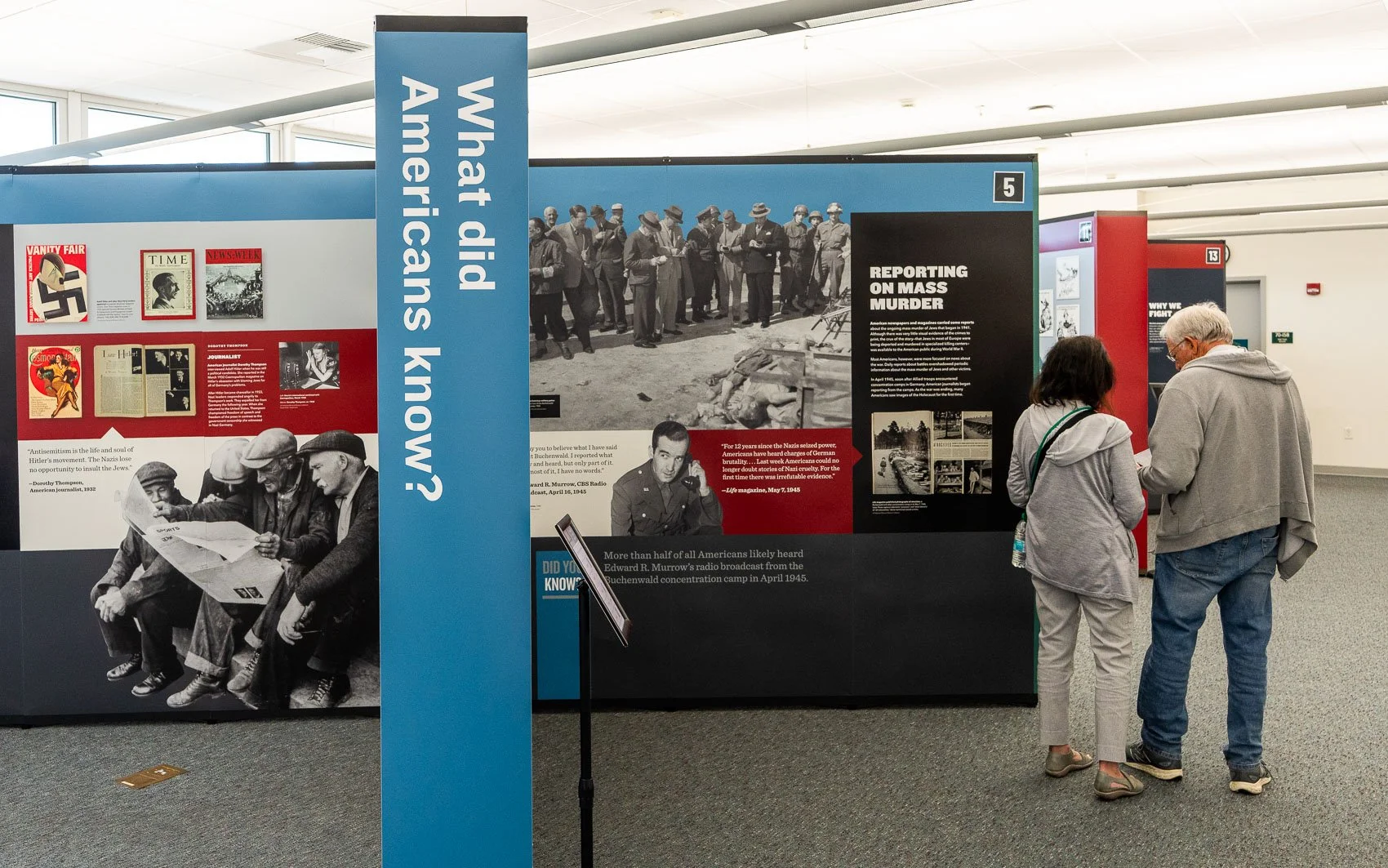
Visitors listen to the audio tour for panel 5, which outlines media coverage of the Holocaust. (Photo by Thomas Murphy/Times of San Diego)
A traveling Holocaust exhibit at Grossmont College’s library shows how the United States responded to Nazi Germany’s persecution and murder of 6 million Jews.
“It doesn’t concentrate on victims and perpetrators. Instead, it focuses on American citizens, our society, our government,” said Nadra Farina-Hess, the college’s cataloging librarian, who spent two years making this exhibit, “Americans and the Holocaust,” possible. “What did we know and what did we do?”
The free exhibit supports Holocaust education with curated displays and a lecture series, covering topics from propaganda to survivor stories and stateside connections, such as Japanese internment and Jim Crow laws. It opened to the public last month and will close on May 21.
It tackles how the United States’ own prejudices – racism, segregation and antisemitism – caused the country’s doors to close to the victims. The museum explains that Americans knew about the World War II atrocities earlier than most visitors would expect.
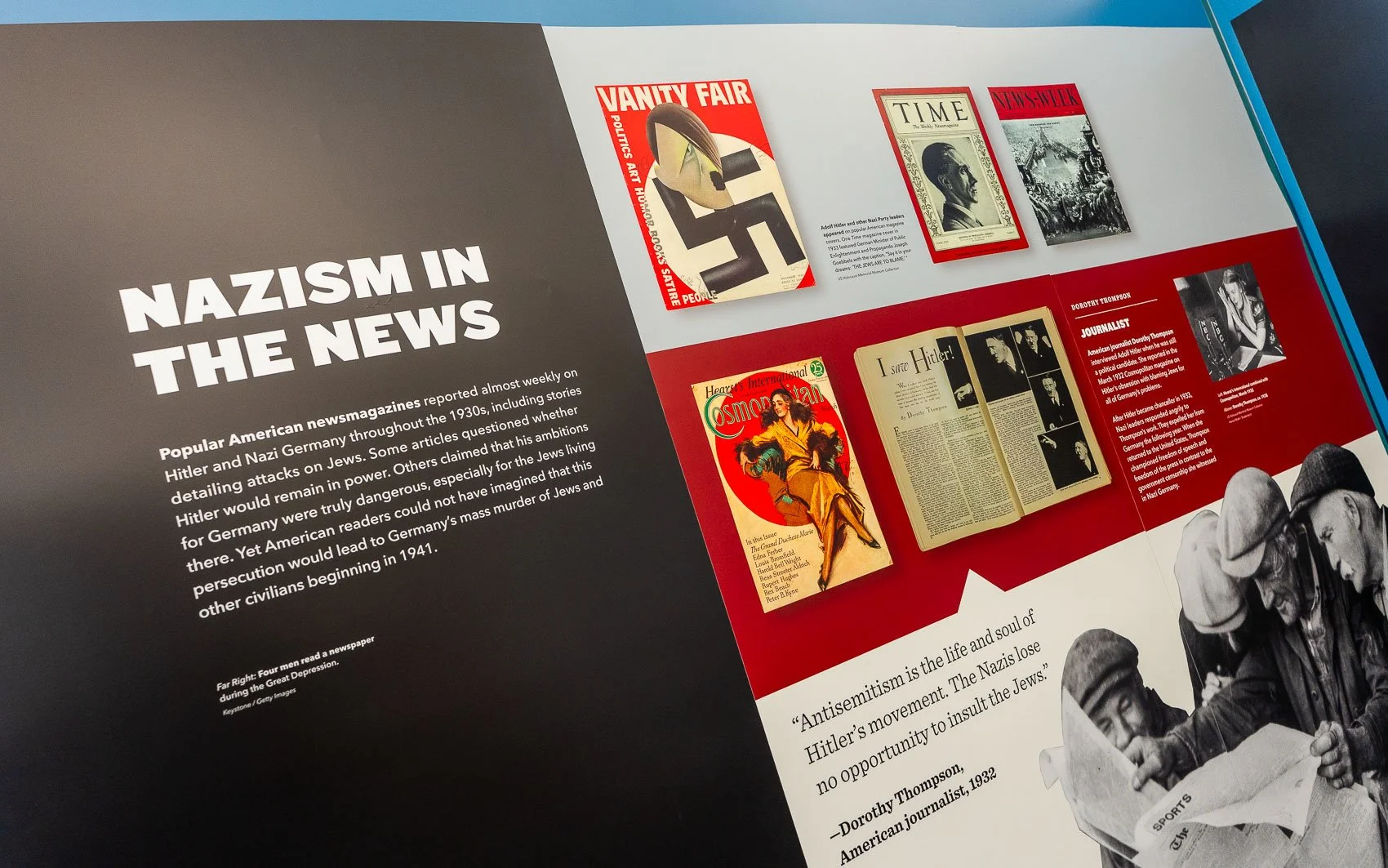
This panel outlines how news media portrayed and portrayed the Nazis during the 1930s. (Photo by Thomas Murphy/Times of San Diego)
“One of the kiosks is an interactive map of the United States, where you can pick any state and see what newspaper articles were published in the 1930s. It helps show what information Americans had about the persecution of Jews – far before World War II even began,” Farina-Hess said.
The exhibit offers key resources in its exploration of America’s response to the Nazi’s persecution, including books, articles, teaching tools and primary sources – such as official documents, newspapers, letters and interviews.
Grossmont is the only location hosting the traveling exhibit in California. Already, it has seen 15,000 visitors and the library has offered extended hours.
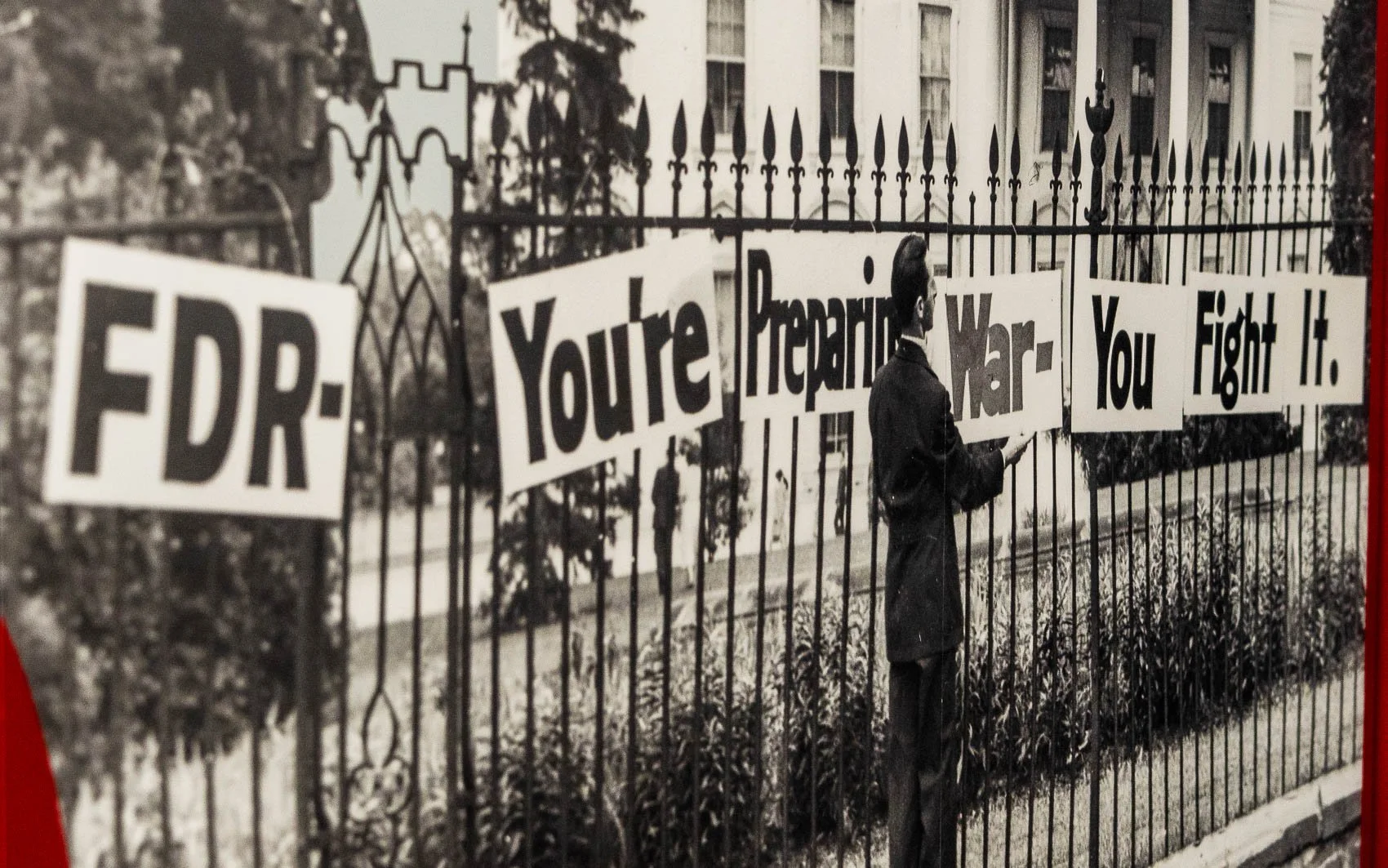
The exhibit features this photo of an anti-war protest slogan attached to the White House fence during the 1930s Sudetenland Crisis. (Photo by Thomas Murphy/Times of San Diego)
This is part of a national initiative by the United States Holocaust Memorial Museum and American Library Association called “Now at Your Library,” with Grossmont College hosting one of 50 such exhibits across the country. Only three are at community colleges.
“The response has been overwhelmingly positive. Everybody who’s come through here, community members and students alike, have just been grateful,” Farina-Hess said.
The exhibit is primarily self-guided, but Grossmont’s Media Communications department utilized its professional recording studio to create an audio tour for visitors – available in Spanish, Arabic and American Sign Language, suiting the needs of the college’s student body.
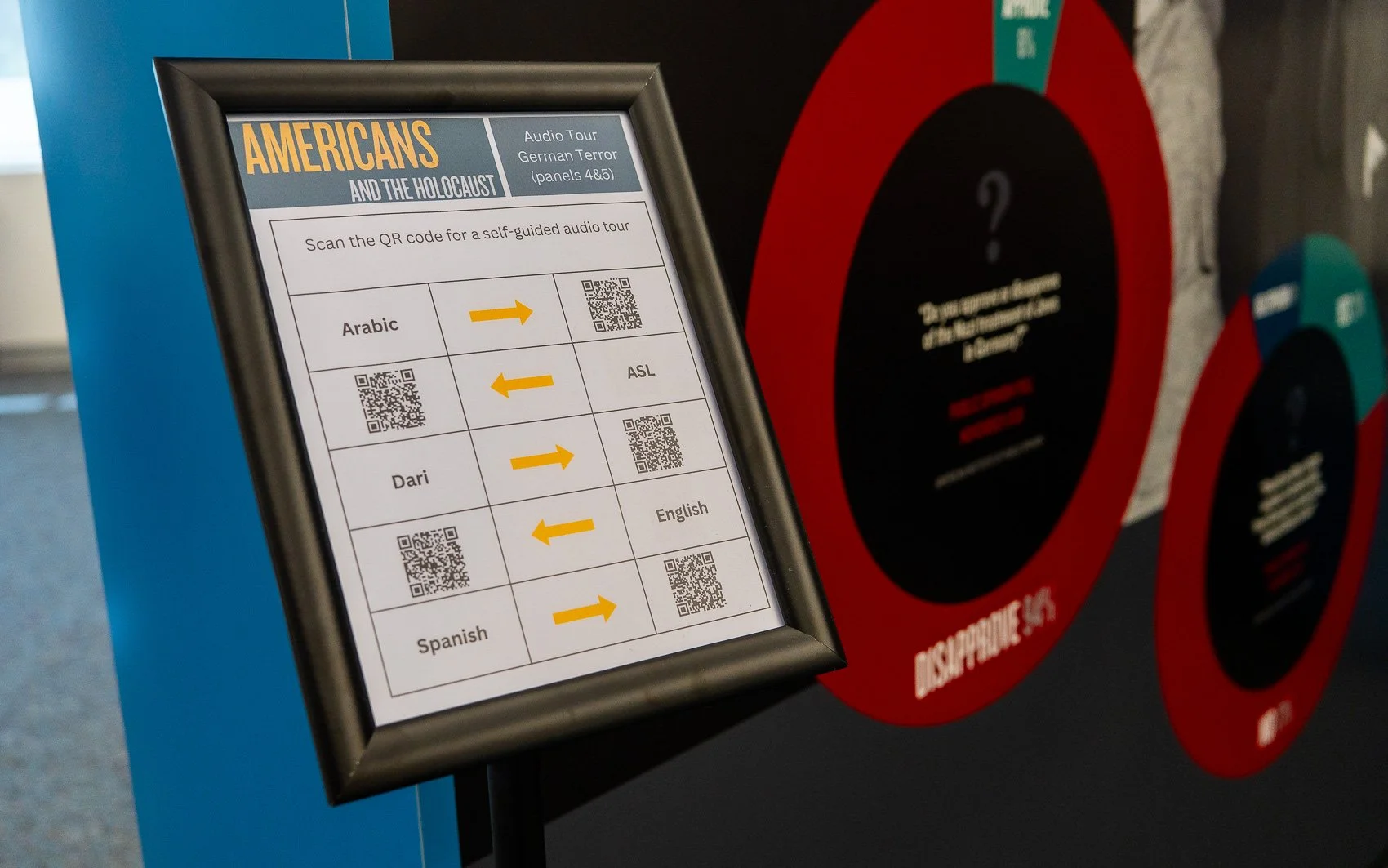
The audio tour QR codes for exhibit panels four and five. (Photo by Thomas Murphy/Times of San Diego)
These recordings will be made available to the next libraries that host the exhibit, helping more people engage with history.
Since local schools lack funding for field trips, the Legacy of Light Goldberg Institute for Holocaust Education has made donations to provide bus transportation for visiting groups.
This organization also created the Spark Interactive bus, a mobile classroom that brings the exhibit’s lessons to schools across the county – a “reverse field trip,” as Farina-Hess calls it.
Large classes are split in two. While one tours the exhibit, the other group of students listen to the stories of second-generation Holocaust survivor Bob Gans.
If Gans is unavailable, students paint ceramic butterflies with kits provided by The Butterfly Project to remember the 1.5 million children who died in the Holocaust. Grossmont plans to use these butterflies in a permanent art installation in the library.
“It makes you think about the past so that you can move forward with social justice issues with more information today and question your own actions,” Farina-Hess said. “To look at history, but also to look forward and make sure that, as a society, we try to do things that are socially right for our communities.”
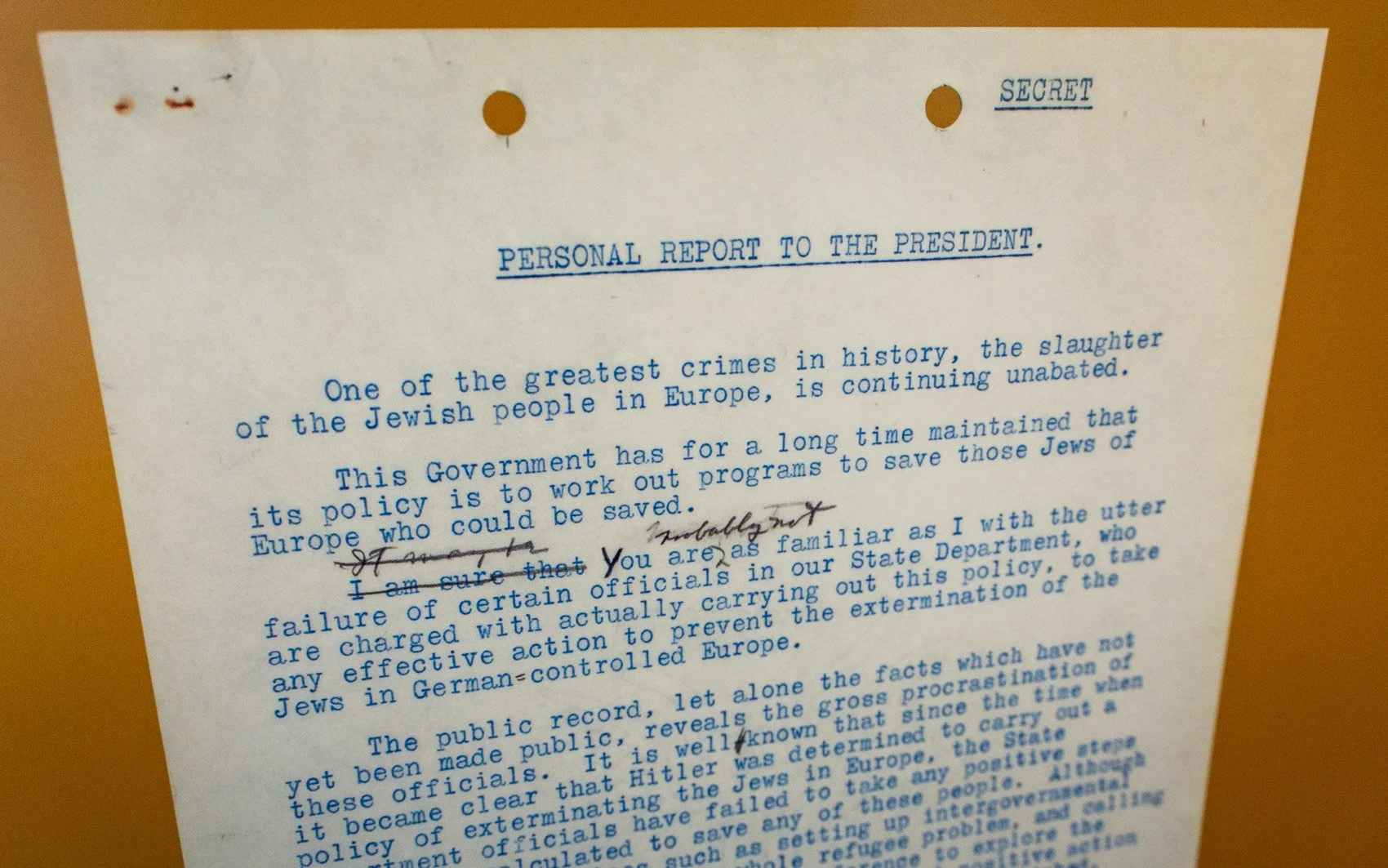
A personal report to President Franklin D. Roosevelt gives a scathing review of government inaction in response to the Holocaust. (Photo by Thomas Murphy/Times of San Diego)
» Originally published by Times of San Diego and La Mesa Courier on May 14, 2026.