Lifeguards save lives. California is only now recognizing them as first responders
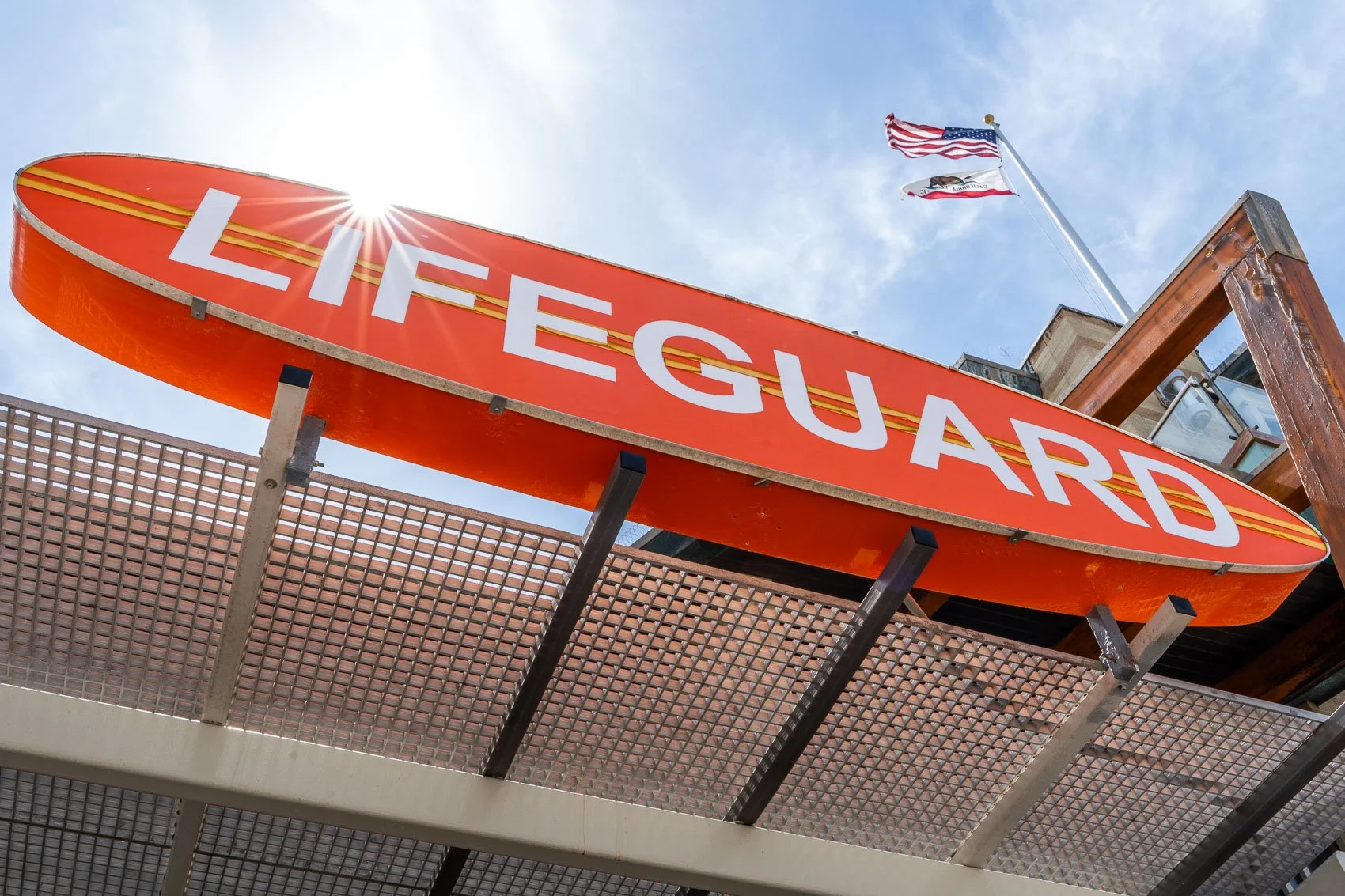
A surfboard-shaped lifeguard sign at the Imperial Beach station. The United States and California flags fly together above the station.
California lawmakers will formally recognize lifeguards as first responders, a classification that supporters say is long overdue.
Senate Concurrent Resolution 192, which recognizes open-water lifeguards as first responders and emergency response providers, passed through the Rules Committee and the Senate before the State Assembly approved it on August 19. The resolution will take effect after it is signed by the Secretary of State, bypassing the governor’s office.
This is only the start. Advocates are promoting a broader effort to give lifeguards the recognition, benefits and protections afforded to other first responders.
“It’s long overdue; a lot of states are doing this,” said Chris Carlson.
Carlson’s son, Ben, died while saving a drowning victim at Newport Beach in July 2014. Chris later started a foundation in his son’s honor. A 15-year veteran, Ben was the first lifeguard to be posthumously awarded the Medal of Honor.
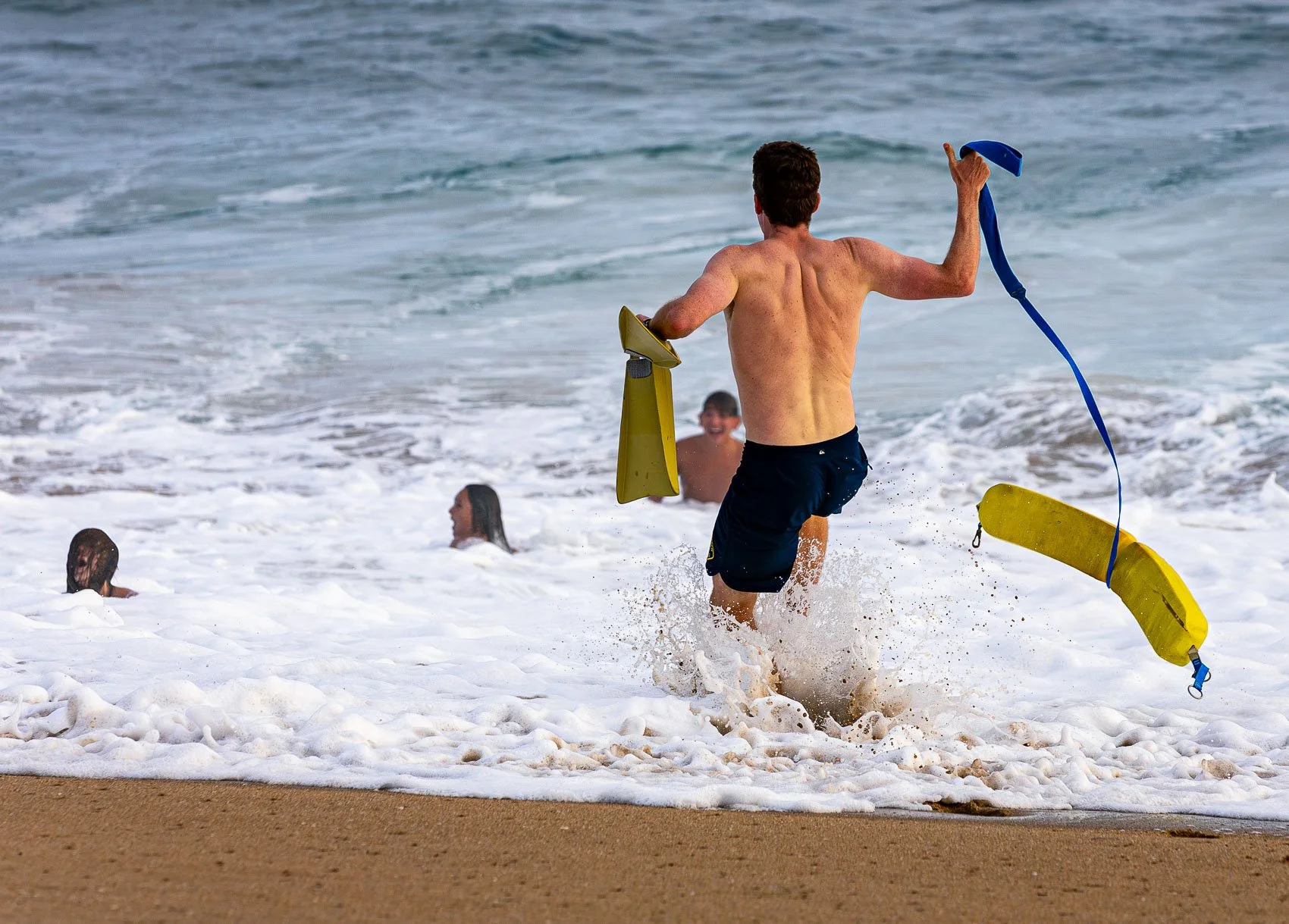
Lifeguards perform a critical Shorebreak rescue during a busy day in Newport Beach, CA. (Image courtesy of the Lifeguard Project)
California’s resolution mentions the Ben Carlson Foundation, honoring his sacrifice and illustrating why supporters say lifeguards’ work must be formally recognized.
Despite having performed over 1.4 million rescues in California’s oceans, lakes and rivers, lifeguards are not recognized the same way as firefighters, police and other first responders.
California now joins New Jersey and Hawaii in formally recognizing open-water lifeguards as first responders.
Veteran San Diego lifeguard Drasko Bogdanovic calls this “a simple oversight,” saying nobody thinks of lifeguards as critical public safety infrastructure “until you’re the one that’s not breathing out the back of six-foot waves and can’t get back to shore.”
The work of California lifeguards was celebrated this past summer in Santa Cruz after Ryder Williams, a 16-year-old California State Parks lifeguard, was captured on video rescuing a child from 8-to-10-foot waves at Seabright State Beach on July 25.
Video of the rescue went viral. Williams was invited to the White House, meeting President Donald Trump on Aug. 17.
California State Parks Lifeguards at Monastery State Beach training during a cold winter swell with large shorebreak in Monterey, CA. (Image courtesy of the Lifeguard Project)
“A 16-year-old lifeguard might see a dead body their first day at work,” Bogdanovic said, who began his own career at 16-years-old protecting North County beaches. “How does that separate them from firefighters and law enforcement, who are dealing with similar things? Yet, the 16-year-old kid is part-time, doesn’t get the same benefits or the same resources.”
Bogdanovic, who leads the nonprofit Lifeguard Project, said the viral rescue and White House visit came at an opportune time for advocates pushing the state resolution. But he sees California’s resolution as a starting point, not an end goal.
“I don’t think this single resolution adds any crazy changes to our field, but they do start the process with recognition,” Bogdanovic said. “It levels the playing field of what lifeguards are even considered from an image and response perspective, which then allows us to advocate more.”
He pointed to broader issues facing lifeguards, including access to year-round, full-time work.
“There’s lifeguarding year-round, but these seasonal guards are trying to work their hours so they can try to make a living the entire year. Yet, it’s not classified as a full-time position,” Bogdanovic said.
Seasonal support is another key issue for Bogdanovic, who says departments are often overburdened protecting California’s coastline during peak tourist season.
“The ocean attracts everyone inland, and departments are taking the brunt of the impact from that visitation, not realizing what the real impact is that these lifeguards are burdened by,” Bogdanovic said.
In the City of San Diego
San Diego lawmakers told Times of San Diego they support the measure, with every councilmember who responded unanimously backing the resolution.
“Every day, San Diego lifeguards put their own safety on the line to protect our communities and save lives. They pull people from ocean riptides and swift, chemical-laden waters during floods, respond to heart attacks and traumatic injuries on our beaches, and are often the first on the scene to provide medical care,” Councilmember Sean Elo-Rivera wrote.
Councilmembers Marni von Wilpert, Henry Foster III, Jennifer Campbell and Stephen Whitburn also expressed support.
Mayor Todd Gloria has not taken a position on the nonbinding resolution, a city spokesperson said. Council President Joe LaCava declined to comment, citing ongoing negotiations with employee organizations. Councilmember Vivian Moreno did not respond to requests for comment.
Council President Pro Tem Kent Lee wants lifeguards recognized for their lifesaving work, pointing to the unique niche they work within.
“They are routinely the first trained professionals on the scene for drownings, cardiac arrests, flood rescues, cliff rescues, scuba diving rescues, and boating emergencies,” Lee said.
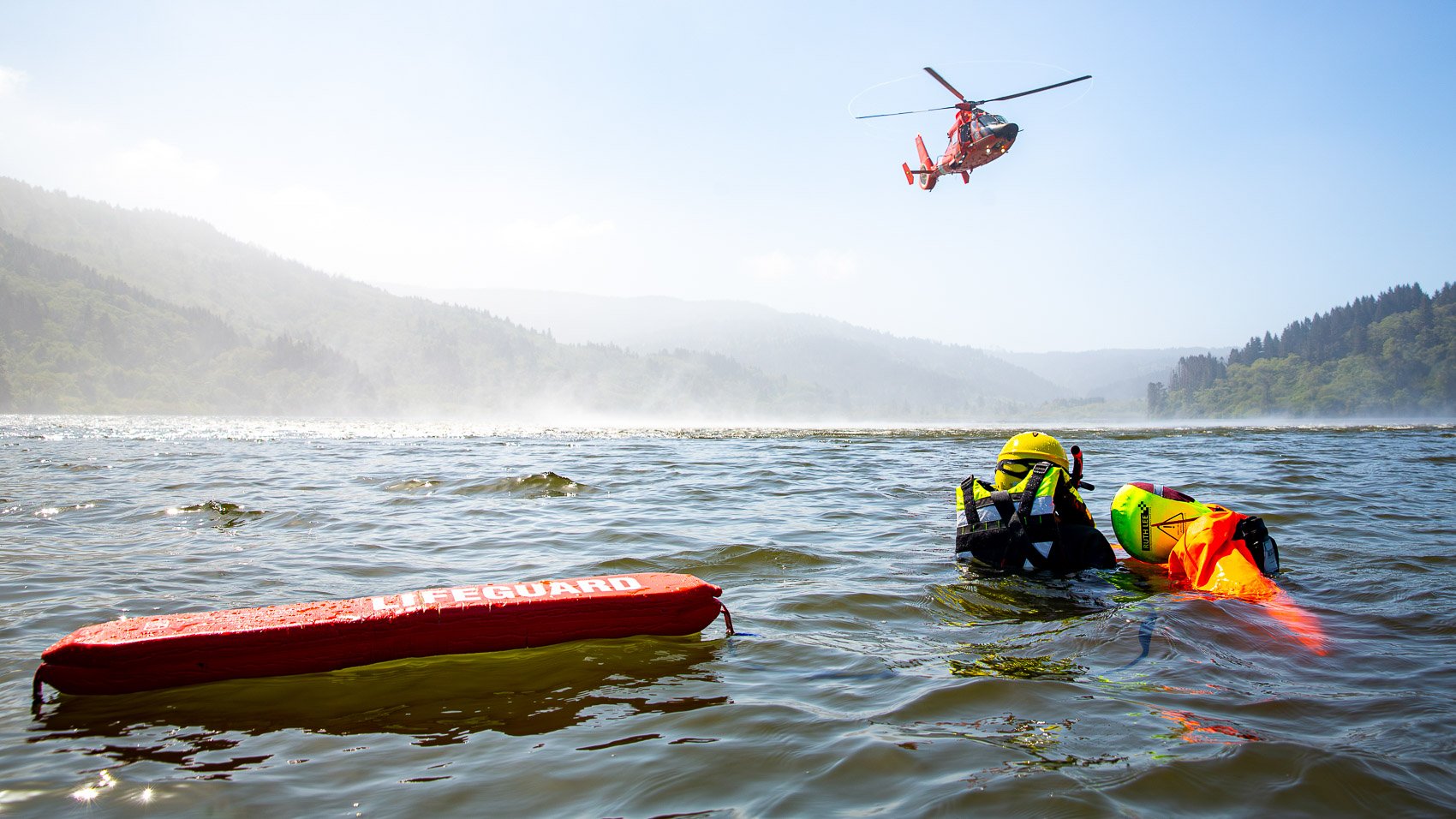
California State Parks Lifeguards train with United States Coast Guard Sector Humboldt Bay for a joint rescue training operation of an unconscious swimmer in the water. (Image courtesy of the Lifeguard Project)
Councilmember Raul Campillo is glad to see the measure passed without opposition, pointing out that San Diego’s lifeguards operate as part of Fire-Rescue without the same legal classification as firefighters.
That is how San Diego’s department is set up, but lifeguards operating along California’s coast are a mix of public, private and state employees — illustrating why a broad state measure is necessary to ensure they are all properly recognized.
State measures have made substantial progress, but there is also movement at the federal level that could change lifeguards’ first responder status across the nation.
At the federal level
Meanwhile, federal lawmakers’ efforts have faced a similar uphill climb. New Jersey Rep. Christopher Smith has introduced three measures since 2023 calling for open-water lifeguards to be recognized as first responders and emergency response providers. None have made their way out of committee.
Representative Juan Vargas, who serves southern San Diego and Imperial counties, expressed his support for House Resolution 1188 in a statement to Times of San Diego. He said lifeguards’ work deserves recognition at the highest level.
“Open-water lifeguards put their own safety at risk every day to help protect others. They deserve to be federally recognized as first responders and integrated into the broader emergency response network,” Vargas wrote.
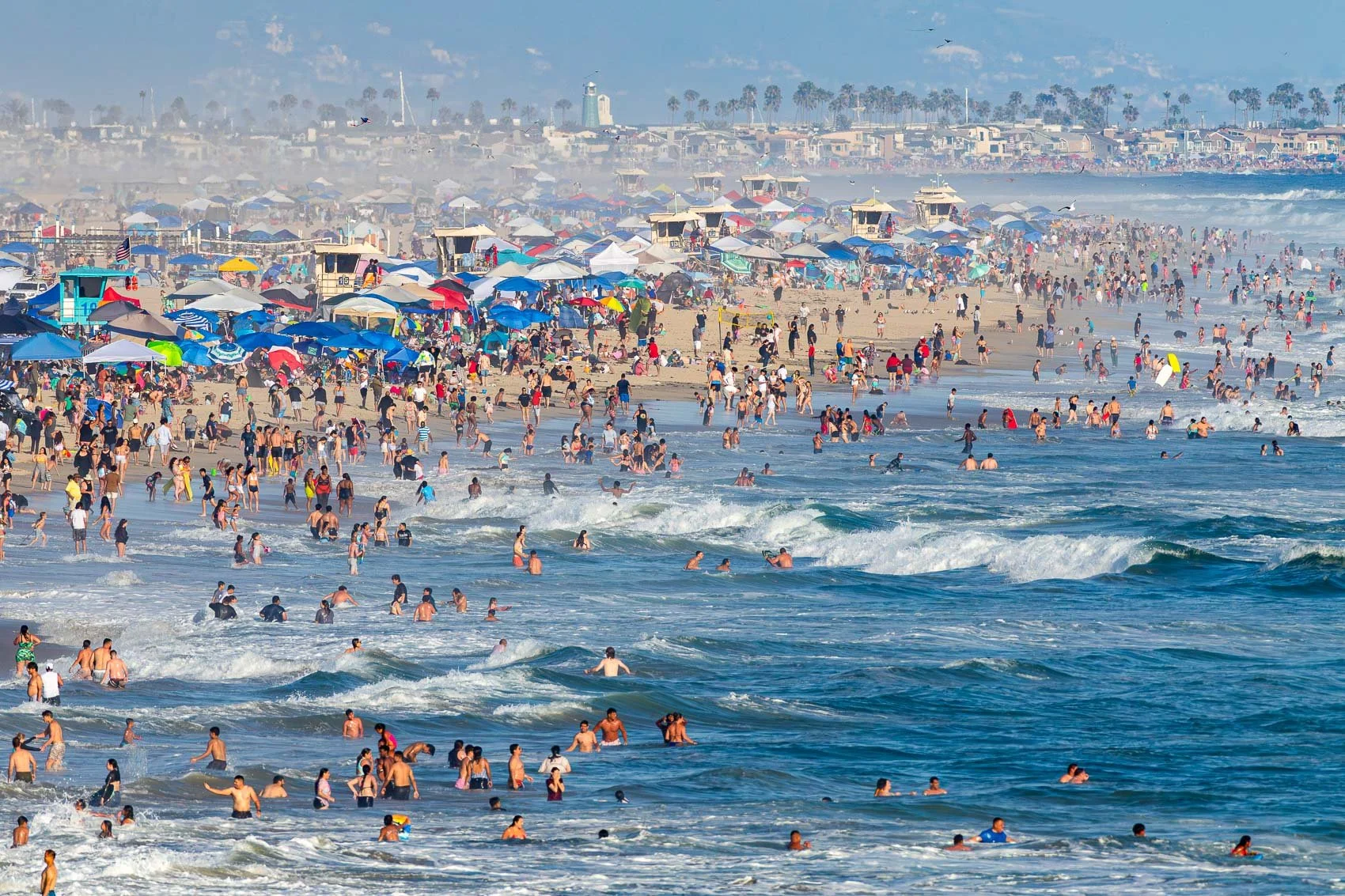
Fourth of July beach crowds in Huntington City and Huntington State Beach show minimal lifeguard resources on a busy beach with rip currents and large visitation at Huntington Beach, CA. California’s open-water lifeguards have protected more than 4.5 billion beachgoers and performed more than 1.4 million rescues. (Image courtesy of the Lifeguard Project)
Vargas’ support was echoed by fellow San Diego Rep. Mike Levin, who also called for lifeguards to receive first-responder recognition.
“Open water lifeguards are first responders in every sense of the word,” Levin wrote. “They save lives, treat the injured, and respond to emergencies under some of the toughest conditions imaginable, yet they still don’t have the recognition or protections that other first responders receive.”
“In Congress, I’m working with a number of my colleagues on legislation that recognizes lifeguards as first responders and emergency response providers,” Levin added. “I’m pleased to see that there is a parallel effort at the state level.”
California’s resolution does not immediately change lifeguards’ pay, benefits or working conditions because it is nonbinding. But advocates say formal recognition could give them a stronger foundation to push for those changes — both in California and nationally.
» Originally published by Times of San Diego on August 26, 2026.