The state of homelessness: Examining criminalization and inaction by local government

A beach swingset was damaged and dug up by the storm’s powerful waves.
The coastline of my home has remained the same my entire life — if not longer — but that has changed.
A storm struck the coast of California in December 2023 and decimated the beaches I have known for my entire life. The rolling dunes were reduced to scattered mounds of sand while powerful waves and high tides razed everything else.
Growing up close to the ocean gave me a strong appreciation for California’s natural beauty, the amazing animals and the unique communities formed along the coast.
I needed to see what happened to the beach I’d known for so long.
After the storm subsided, I walked along the beach near my home to assess the damage. This is when I met John, a homeless man who had been living on the dunes for the past two years. His tent had been dragged out into the sea, the high tide swallowing his home and the personal belongings it held.
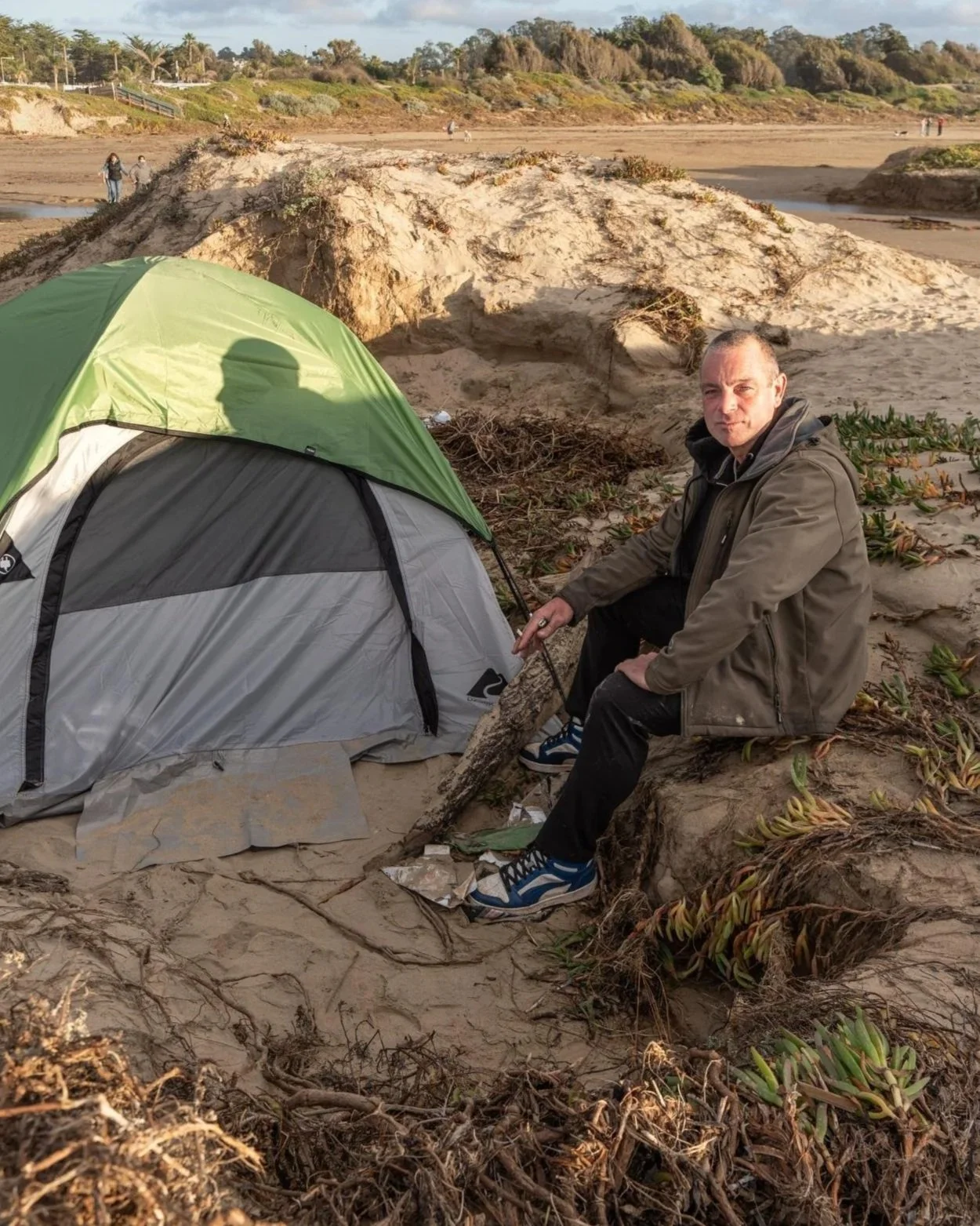
John and his new tent atop one of few remaining sand dunes.
We spent the remainder of our time together searching for his tent along the beach. Using my camera’s flash as a guiding light, we located John’s tent and were able to recover some of his personal belongings.
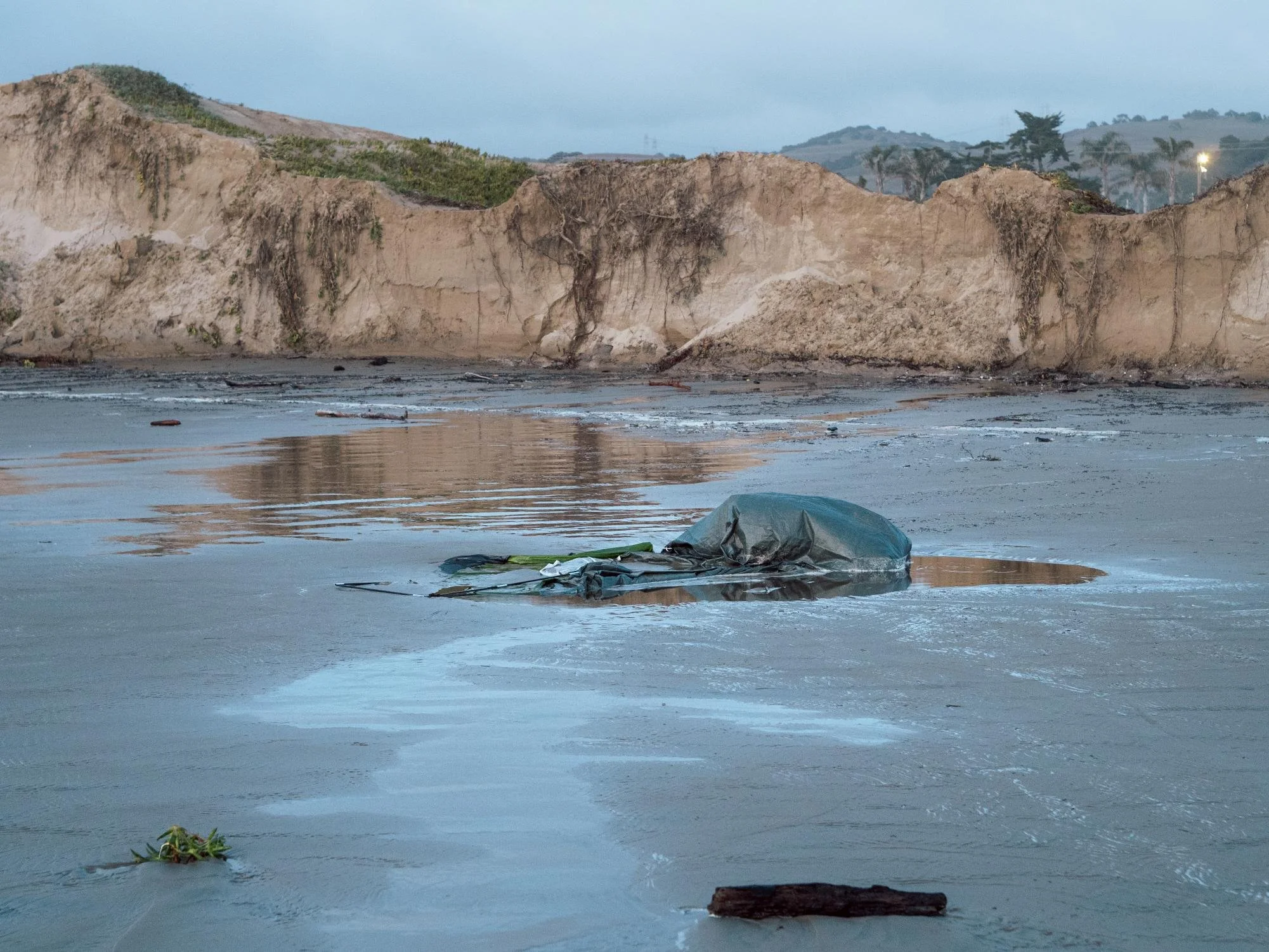
John’s tent and belongings were dragged out to sea by the storm, settling on the beach as the tide slowly receded.
However, the tent itself was ruined. Luckily, John had a friend who was able to bring him a new tent that night. When I returned the next day, I was happy to see a tent identical to the one before sitting atop a mound of sand.
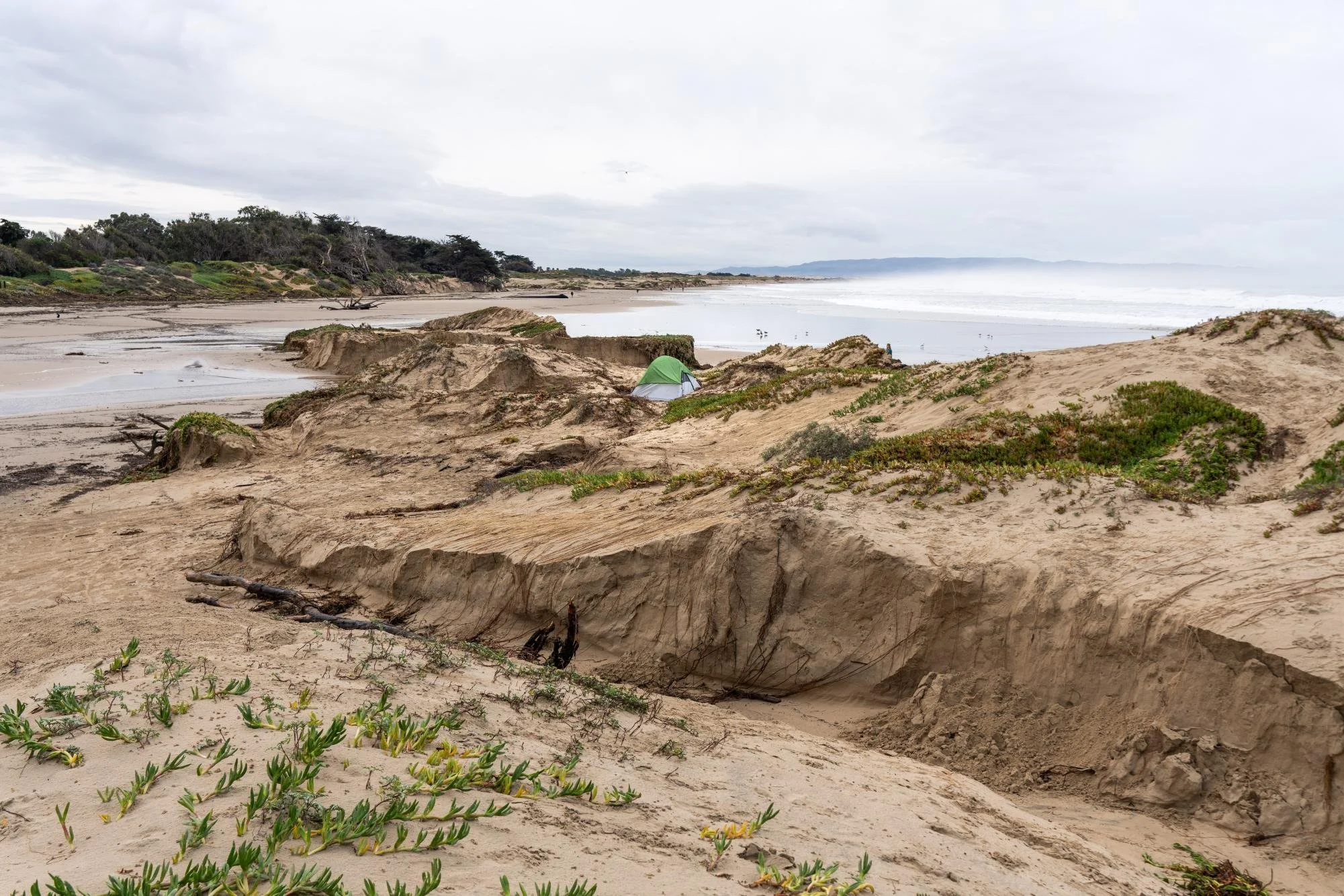
John set up his new tent on one of the few sand dunes to endure the storm.
John could rely on personal connections and relationships to make up for the lack of support he received from the local government. While John received support from his friend and community-driven efforts, others in the homeless community are not as fortunate.
Homelessness has been a consistent issue on the Central Coast, and the problem remains prominent as city officials fail to address it. The current unhoused population in San Luis Obispo County is 1,448, and approximately 80% of these individuals are living without any means of shelter. Instead, they are fully exposed to the elements, most often because there is not adequate space in local homeless shelters.
With the effects of climate change manifesting as harsh coastal storms, the unhoused population in these areas faces high risks that will continue to grow into a more dire situation.
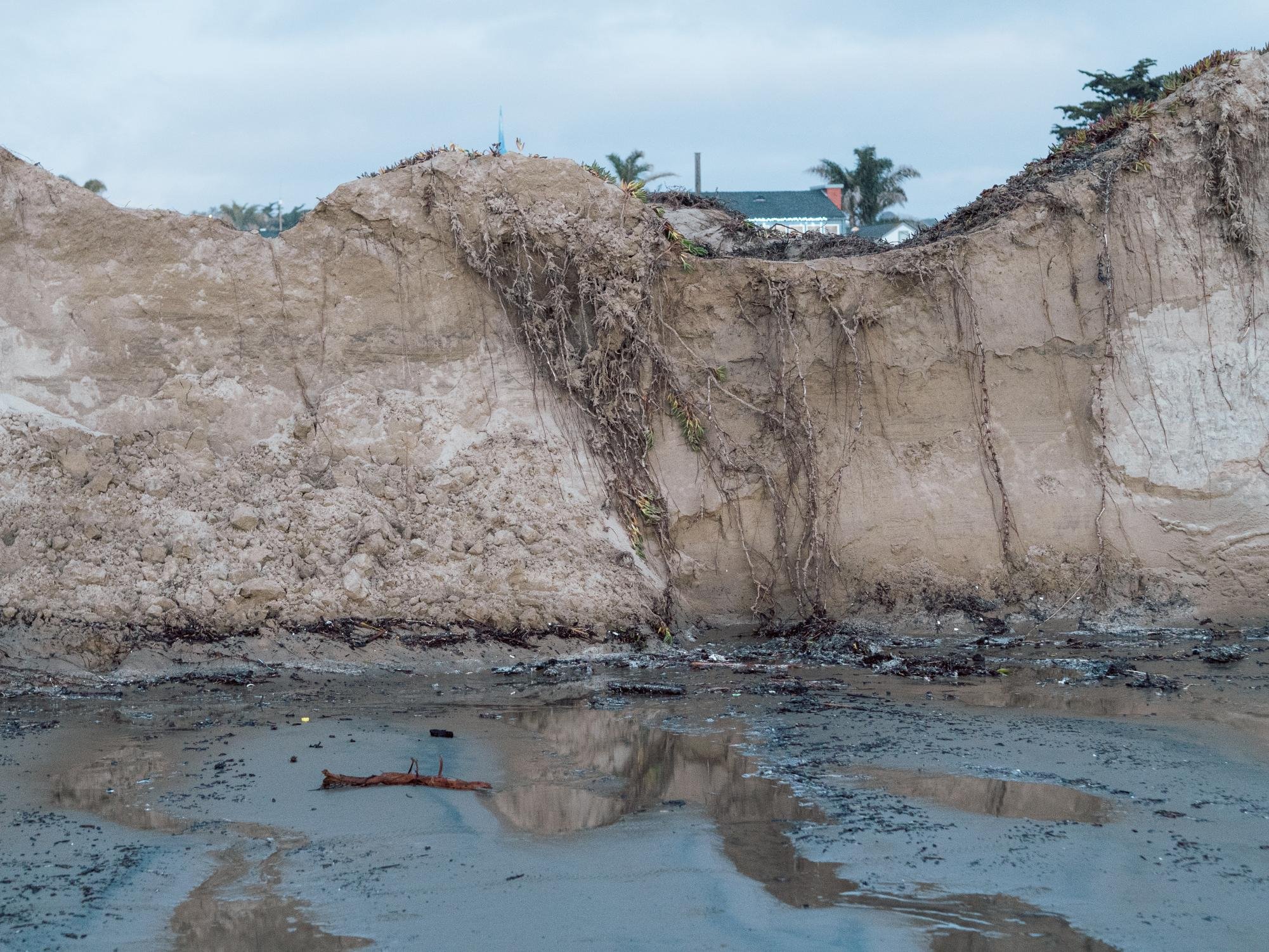
A cross section of sand dunes revealed by the high tide and crashing waves.
There is a predicted 55-inch sea level rise by 2100, leading to coastal flooding that will cause an estimated $100 billion worth of damage to California’s infrastructure. Saltwater contamination and losses to the water supply due to prolonged drought and rising temperatures will also severely impact the most vulnerable. However, the Central Coast’s unhoused population remains ignored and unassisted at both the local and federal levels.
After returning to San Diego, I researched the city’s homelessness issue. What I discovered was the opposite of the hands-off approach I had seen in my county; rather, San Diego’s city officials are actively criminalizing the unhoused.
For example, in June 2023, a new ordinance banning people from camping in public areas went into effect, making it illegal to live unsheltered in the city. The ordinance further displaced an already displaced population of 10,264 homeless people.
This move was supported and promoted by San Diego Mayor Todd Gloria and City Councilmember Stephen Whitburn. Before the ban passed, it was protested by local academics, who validly claimed that criminalization and policing were not effective solutions to the issue of chronic homelessness.
To enable their efforts, the San Diego Police Department utilizes the “Get it Done” app and a non-emergency hotline to receive reports from citizens about the size and location of homeless encampments. There were 58,000 encampment reports in 2023 after the law passed, resulting in 82 arrests and 941 citations.
This only serves to sate public frustration with what has been an ongoing issue in California; citizens are tired and want to see results. 167 fewer people were living unsheltered downtown by July, but it is unclear where these displaced people went and if they received government support.
Arrests and forced dispersion give the illusion of improvement but make the lives of unhoused San Diegans even more difficult. While dispersing, people are often separated from their personal property, resulting in loss or theft. Arrests subject people to long walks back to their encampments after an afternoon in jail.
These tactics only serve to waste time, making it harder for people to get back on their feet. Displacement separates people from support networks, which can be especially deadly given San Diego’s 700% increase in fentanyl overdoses since 2016, as of October 2023.
Gloria’s plan for 2023-24 is to establish new shelters and approved camping areas; it is projected to cost between $30 and $66 million. San Diego is devoting $7.4 million to expanding shelters in 2024, and yet, an additional $2.2 million is being given to SDPD to fund the policing of homelessness.
SDPD’s current budget is $593,516,377. Rather than devoting more money to those who punish the homeless, Gloria should divert funds toward a policy that will have a positive, long-lasting impact.
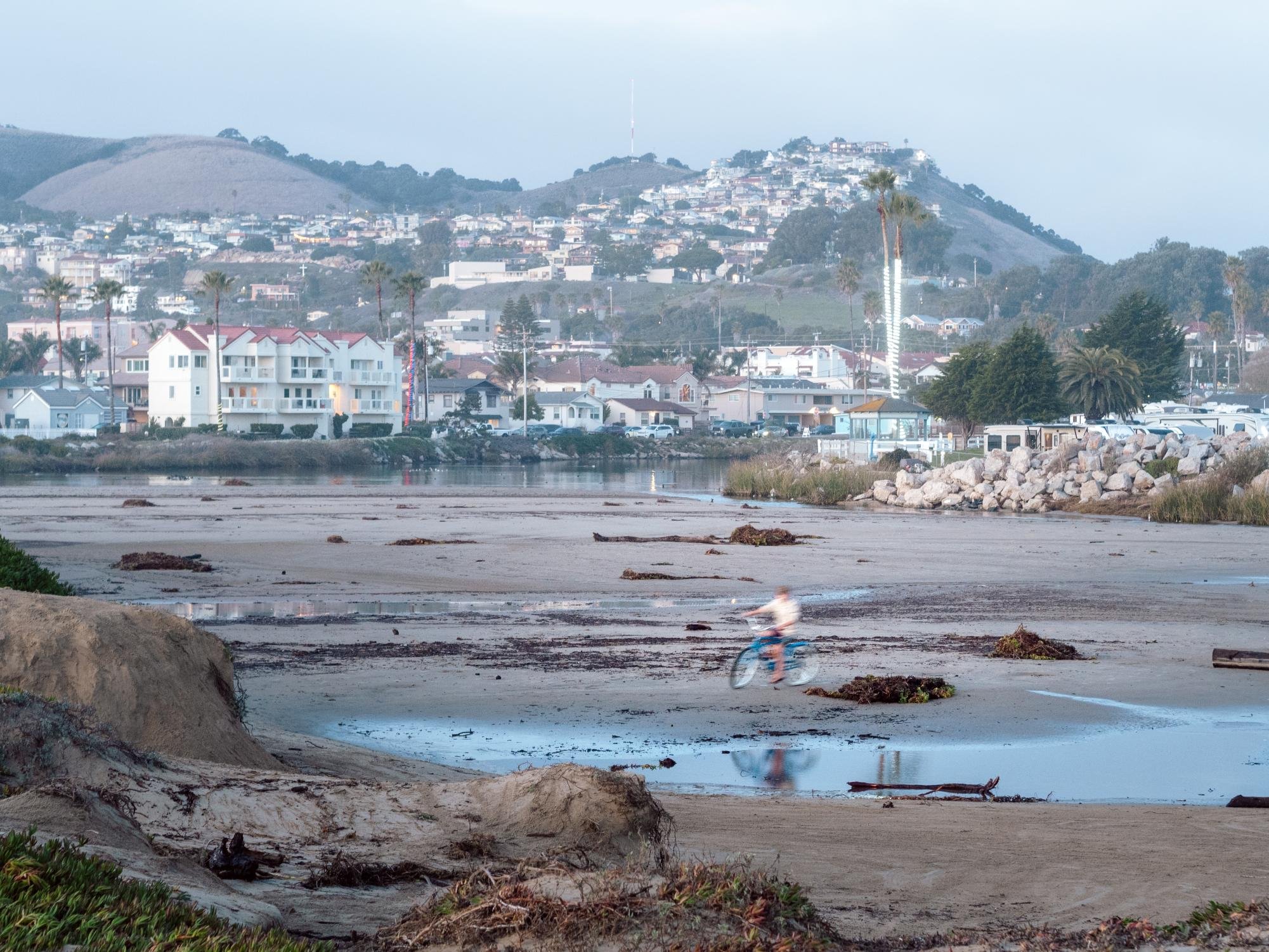
A young boy bikes on the freshly flattened sand of Pismo Beach. The costal community ascends up the hills forming Price Canyon.
People must be housed or sheltered before these projections come about. The Central Coast’s inaction accomplishes nothing and San Diego’s criminalization is actively detrimental.
Homelessness is a housing problem, one we can solve by expanding affordable housing options. If nothing changes, there will be countless more stories like John’s throughout California’s coast.
» Originally published by The UCSD Guardian on Feb. 5, 2024. This article has been modified from the original version.